Sydney Metro: Service design for unplanned disruptions
"Why didn't you tell me earlier?"
August 2019. Sydney Metro had just opened Australia's first driverless railway. The technology was world-class. The customer experience during disruptions was not.
Signal failures, track intrusions, power glitches. When the line stopped, passengers were left guessing. Announcements came late. Staff said one thing, the PA said another, and the app said nothing at all. Social media complaints about disruptions were outnumbering every other type of feedback.
The brief was simple: help us understand what customers need when things go wrong.
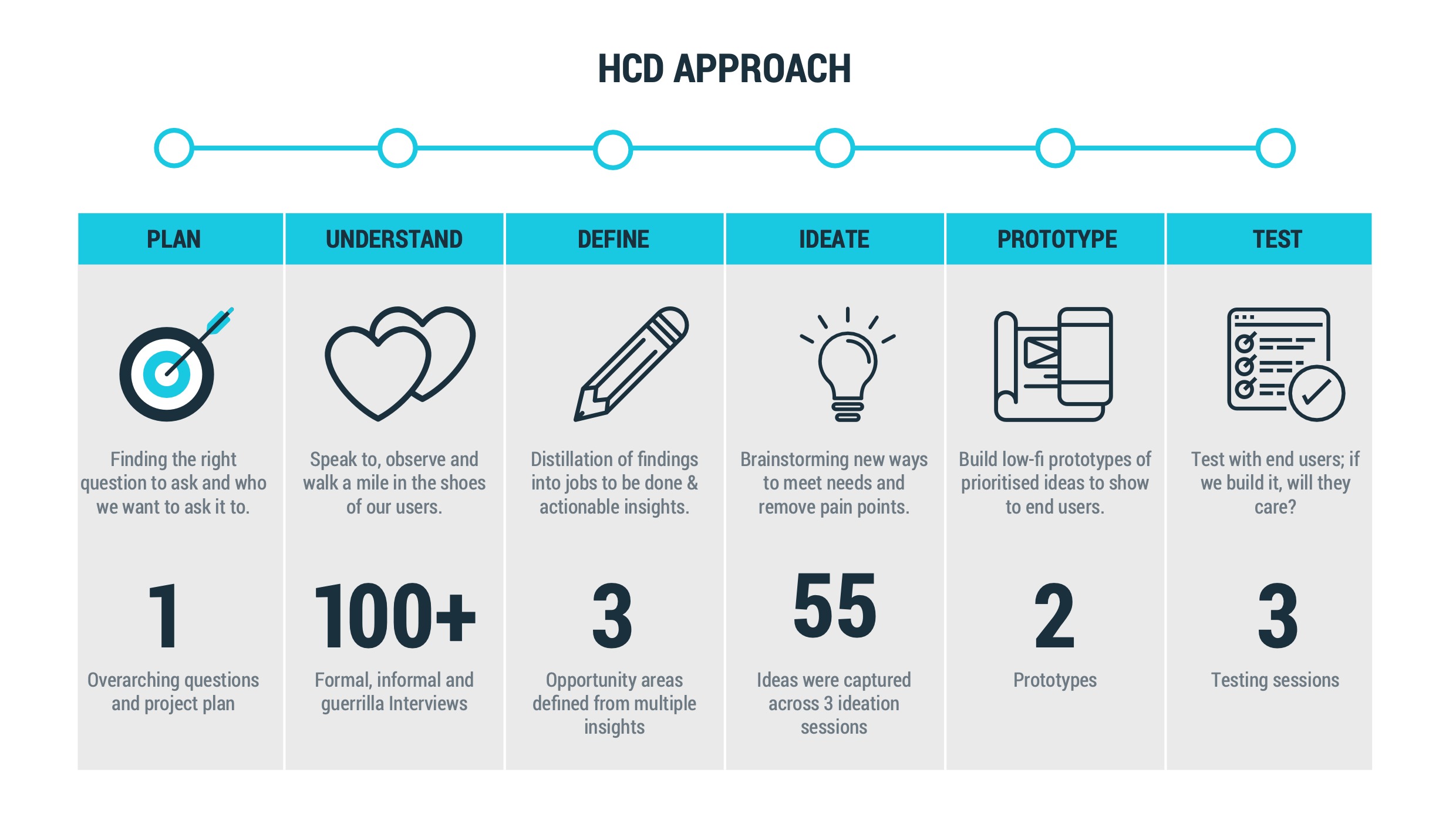
108 conversations in 90 days
I ran the full double-diamond in under three months, starting with the heaviest research phase the project could absorb.
Contextual interviews. 108 participants across six stations, on trains, and in online forums. Semi-structured conversations designed to surface emotional triggers, not just functional complaints. I paired open questions with brand-value-framed statements to get beneath the surface.
Diary studies. Participants logged their commute experiences over two weeks, capturing disruption moments in real time rather than recalling them after the fact.
Live-disruption shadowing. When a disruption happened, I was on the platform watching. How people reacted. Where they looked for information. What they did when they couldn't find it.
The fieldwork produced 355 distinct data points. The synthesis work began.
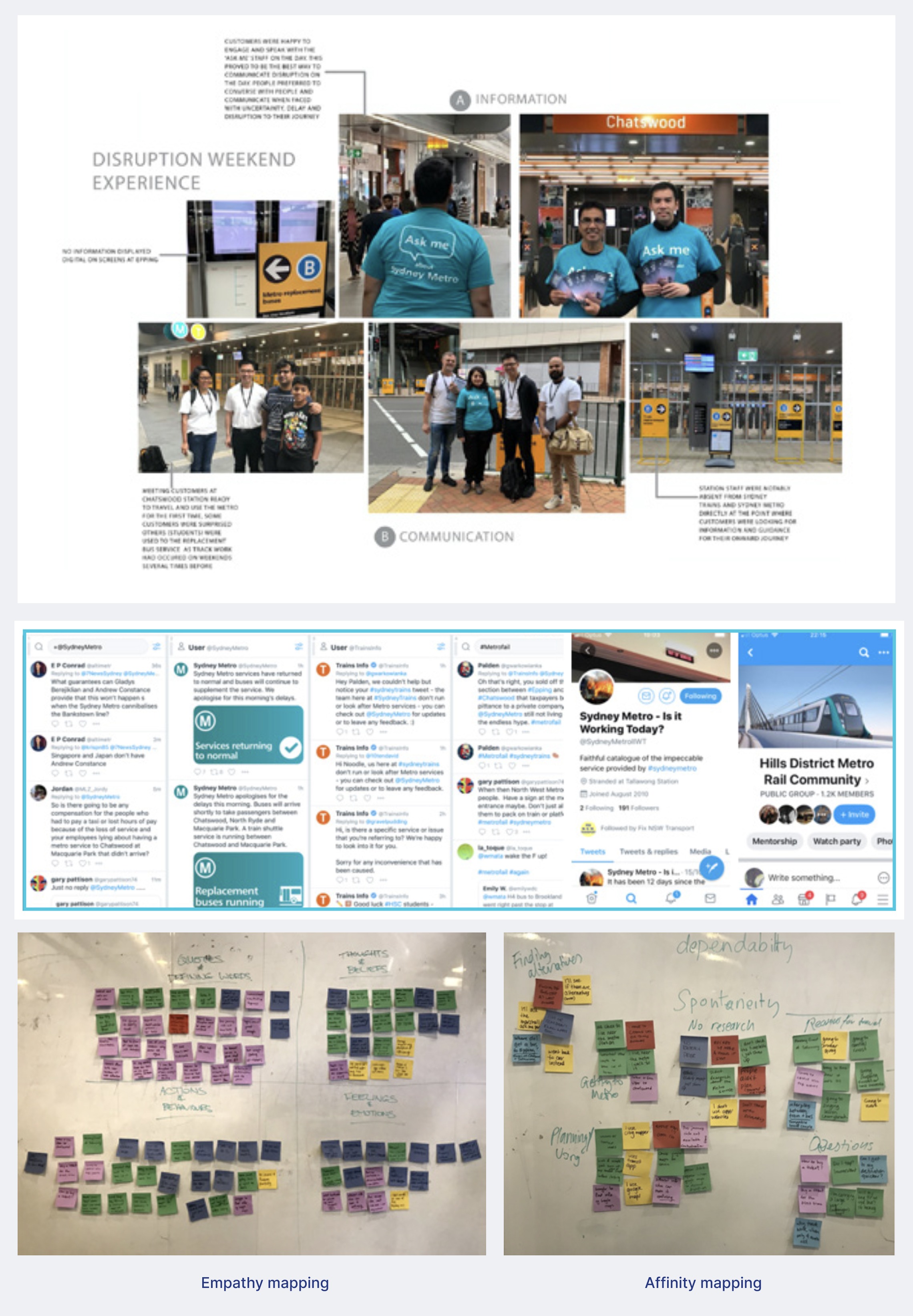
Two emotions, two personas
Affinity mapping and empathy mapping distilled everything into two dominant emotional states: anxiety and helplessness. Not frustration. Not inconvenience. Anxiety and helplessness. That distinction mattered because it changed the design target. You don't solve anxiety with better timetable data. You solve it with earlier, clearer, more trustworthy communication.
From those emotional states, two behaviour patterns emerged.
Planners. Agenda-driven commuters who want proactive alerts and full control over their journey decisions. They check before they leave home. They want to know before they're already standing on the platform.
Non-Planners. Casual riders who rely on ambient information. They don't check an app. They glance at a screen, listen to an announcement, and follow the crowd. If the ambient information is wrong or missing, they freeze.
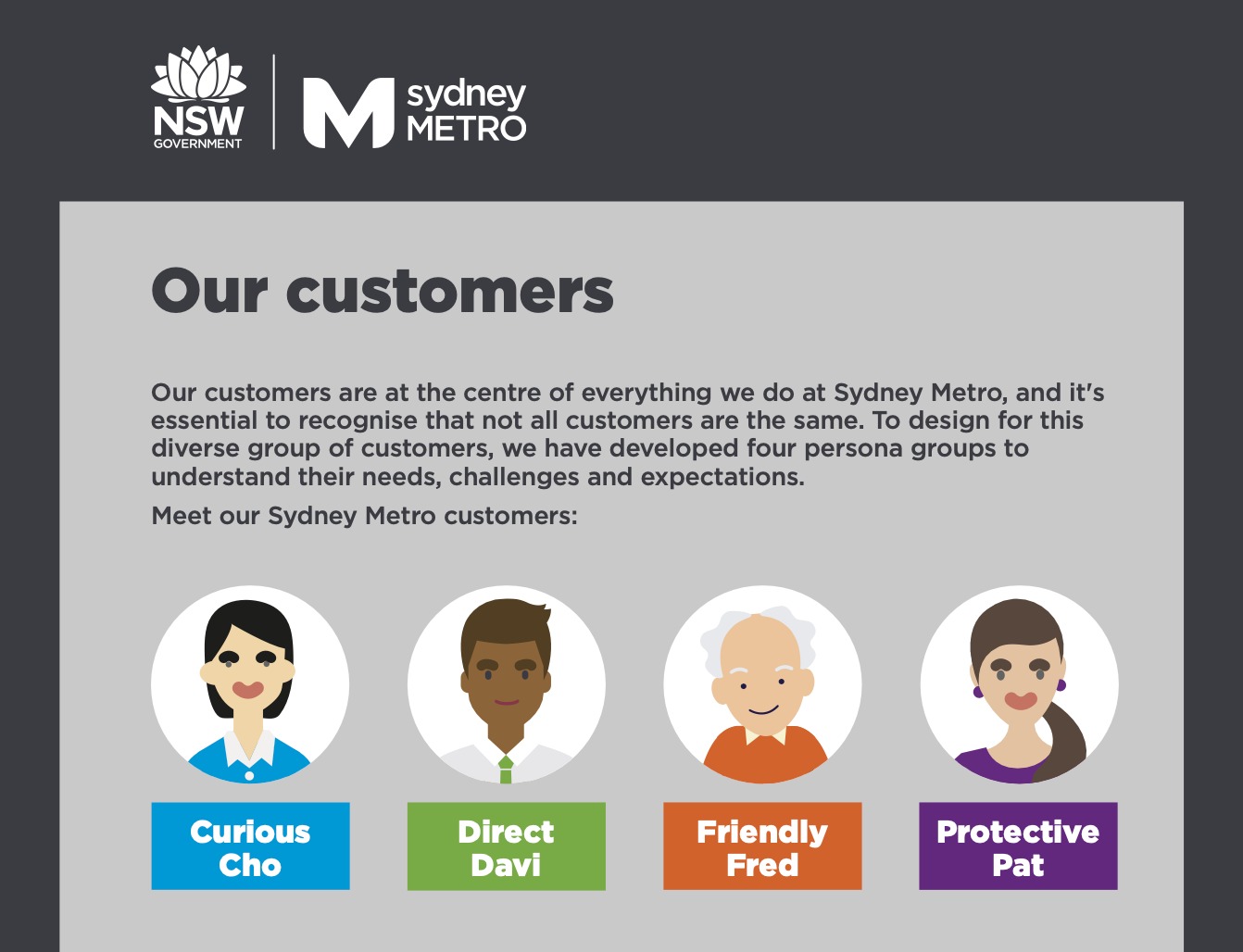
These weren't demographic personas. They were behavioural modes. The same person could be a Planner on Monday morning and a Non-Planner on Saturday afternoon.
Three themes from the research
Timing beats detail. People preferred a 10-minute-early heads-up to a minute-perfect ETA given too late. "Something is wrong, here's what we know" is more useful than silence followed by precision.
One source of truth. When staff, PA announcements, and third-party apps give conflicting information, trust collapses entirely. Passengers don't pick the most accurate source. They stop trusting all of them.
The journey is bigger than the platform. Disruption information that only lives inside the station is too late. Journeys start at home and end at the destination. The information needs to span the whole trip.
Two solutions for two behaviours
I ran three cross-functional workshops with Metro ops, designers, data, and comms teams. Crazy 8s exercises generated over 100 ideas. A customer-value vs. business-feasibility matrix narrowed them down. Two concepts landed in the top-right quadrant.
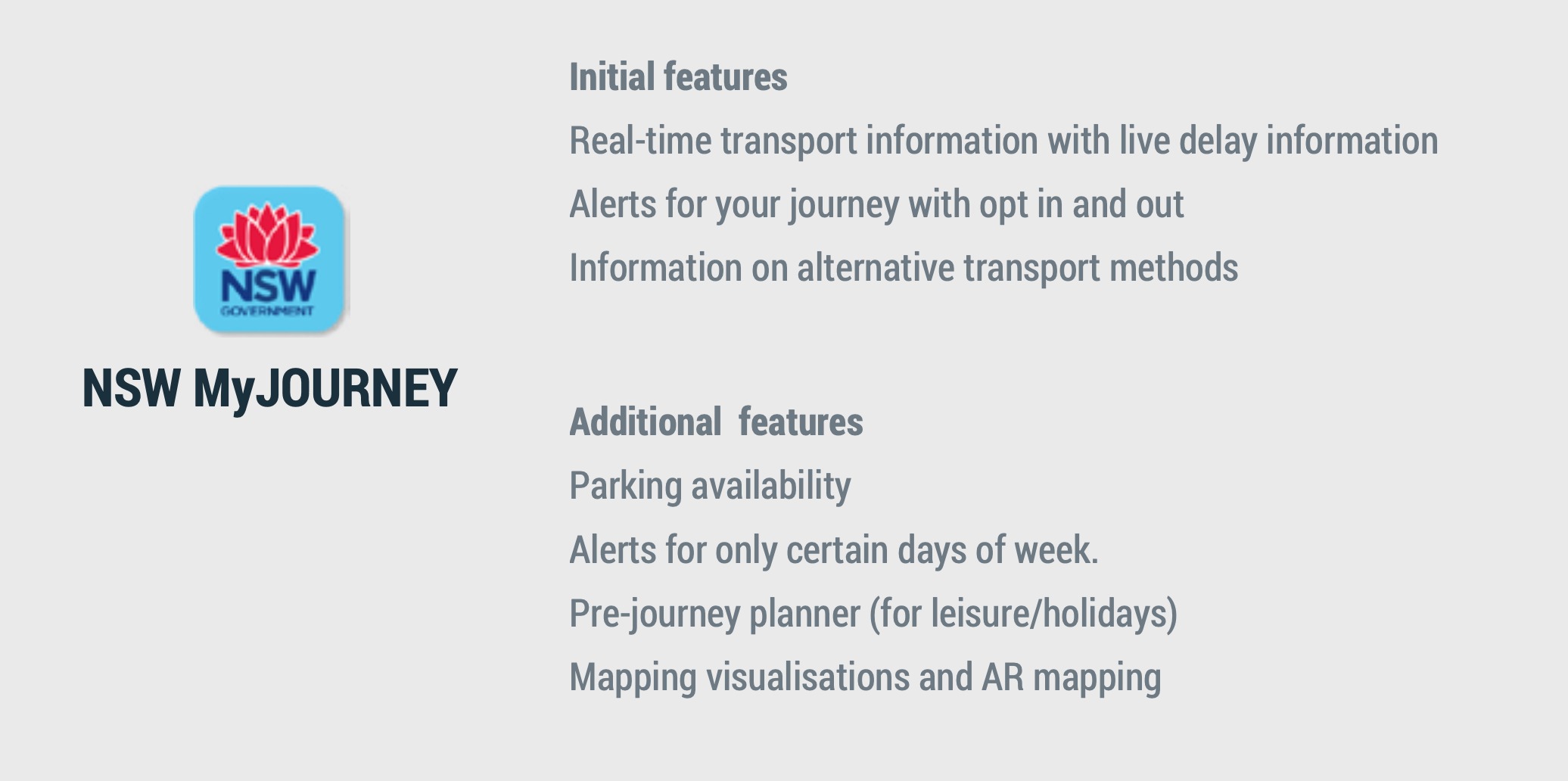
For Planners: MyJourney App
A personalised, live disruption companion. Real-time multimodal delay feed consolidating all data into one place. Opt-in journey alerts and push notifications. An alternative-route builder with parking overlay for door-to-door decision-making. Custom journey "follow" with weekday filters to reduce noise.
Tested with 12 riders. 92% task completion unaided. SUS score of 84. One participant said it surfaced the information they dig for every morning, without the digging.
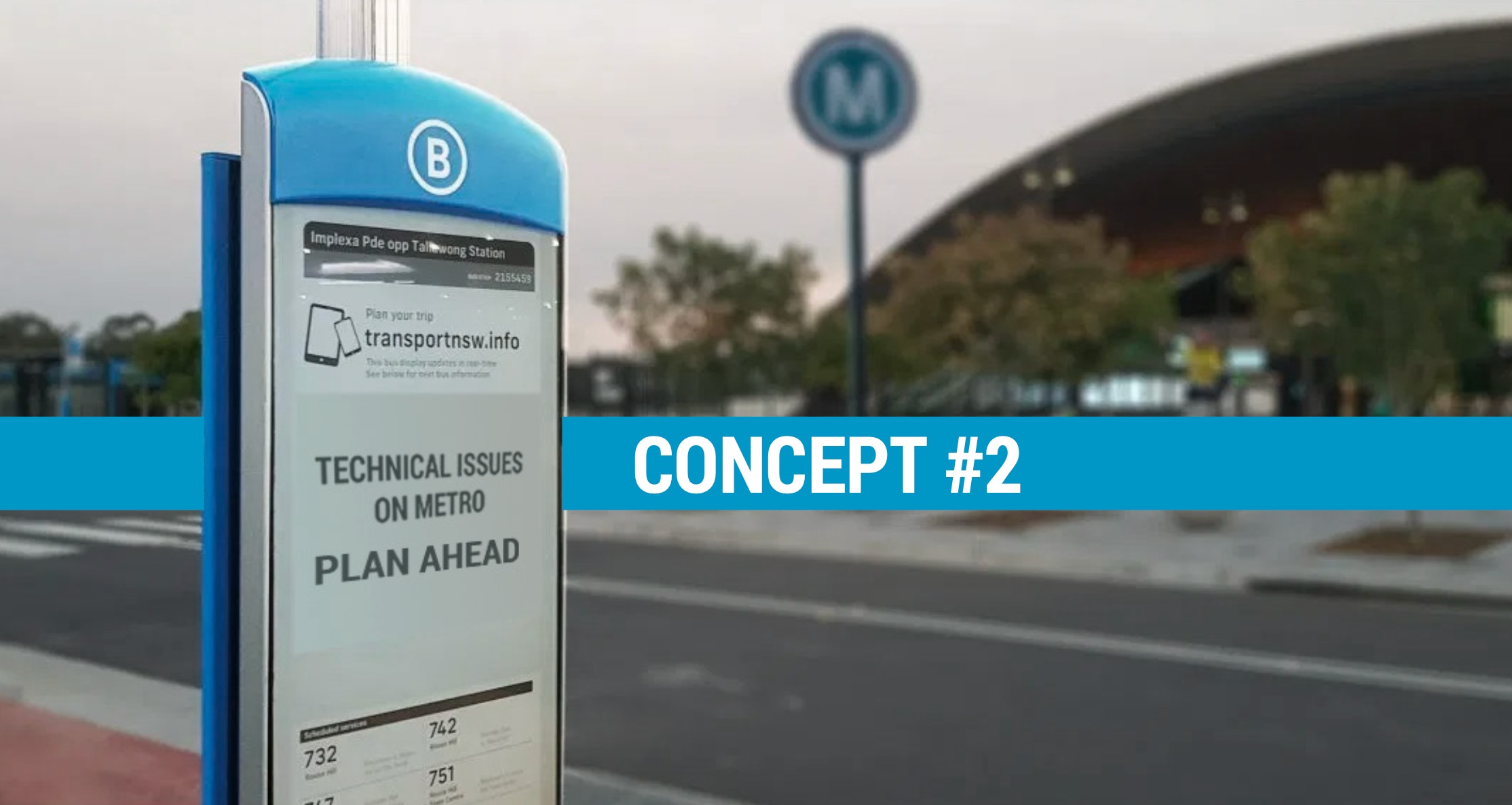
For Non-Planners: Networked Disruption Screens
Real-time disruption updates on LCD and LED screens at stations, shopping centres, and bus interchanges. Automatic "Disruption Mode" that removes the manual update lag. Wayfinding arrows pointing to alternative routes and replacement buses. Idle-time ad inventory to offset maintenance costs.
Tested with 12 riders. 88% task completion. 83% said it would shorten their trip during a disruption.
Impact
Both concepts were approved for feasibility study and capex submission. Beyond the deliverables, the project shifted how the organisation thought about disruption communication.
"One Source of Truth" was adopted into the Customer Information roadmap. Cross-agency collaboration led to the development of an integrated TfNSW transport-data API. Internal estimates projected a 40% reduction in disruption-related social media complaints.
The work was strategic, not shipped. My contract delivered validated concepts and a service blueprint for implementation. But the cultural shift it triggered, from reactive announcements to proactive, passenger-centred communication, was the outcome that mattered most.
What I learned
The biggest insight wasn't about transit. It was about the gap between what organisations think they're communicating and what people actually receive. Sydney Metro had information. They had channels. What they didn't have was a design that matched the information to the moment, the channel to the behaviour, and the timing to the emotion.
108 interviews sounds like a lot. For a service design problem at this scale, it was exactly the right number. Patterns that emerged at interview 20 were confirmed at interview 80 and nuanced at interview 100. The depth of fieldwork gave the recommendations weight that a smaller study couldn't have carried.