Unifying Compare Club's UX to drive growth
Nine websites pretending to be one company
Compare Club had grown through acquisitions. Each product vertical (health insurance, life insurance, energy, home loans) had its own website, its own branding, and its own domain. Nine microsites in total. Some looked professional. Some looked like they were built in 2012. None of them looked like they belonged to the same company.
Users couldn't tell if they were on an official Compare Club site or a third-party affiliate. SEO was cannibalising itself across competing domains. Paid search costs were inflated because the brand was essentially bidding against itself. And conversion? Low. Because trust was low. And trust was low because the experience felt fragmented and unprofessional.
The business needed a single, unified digital presence. My job was to design it.
Research: listening before designing
I led the research phase across three methods.
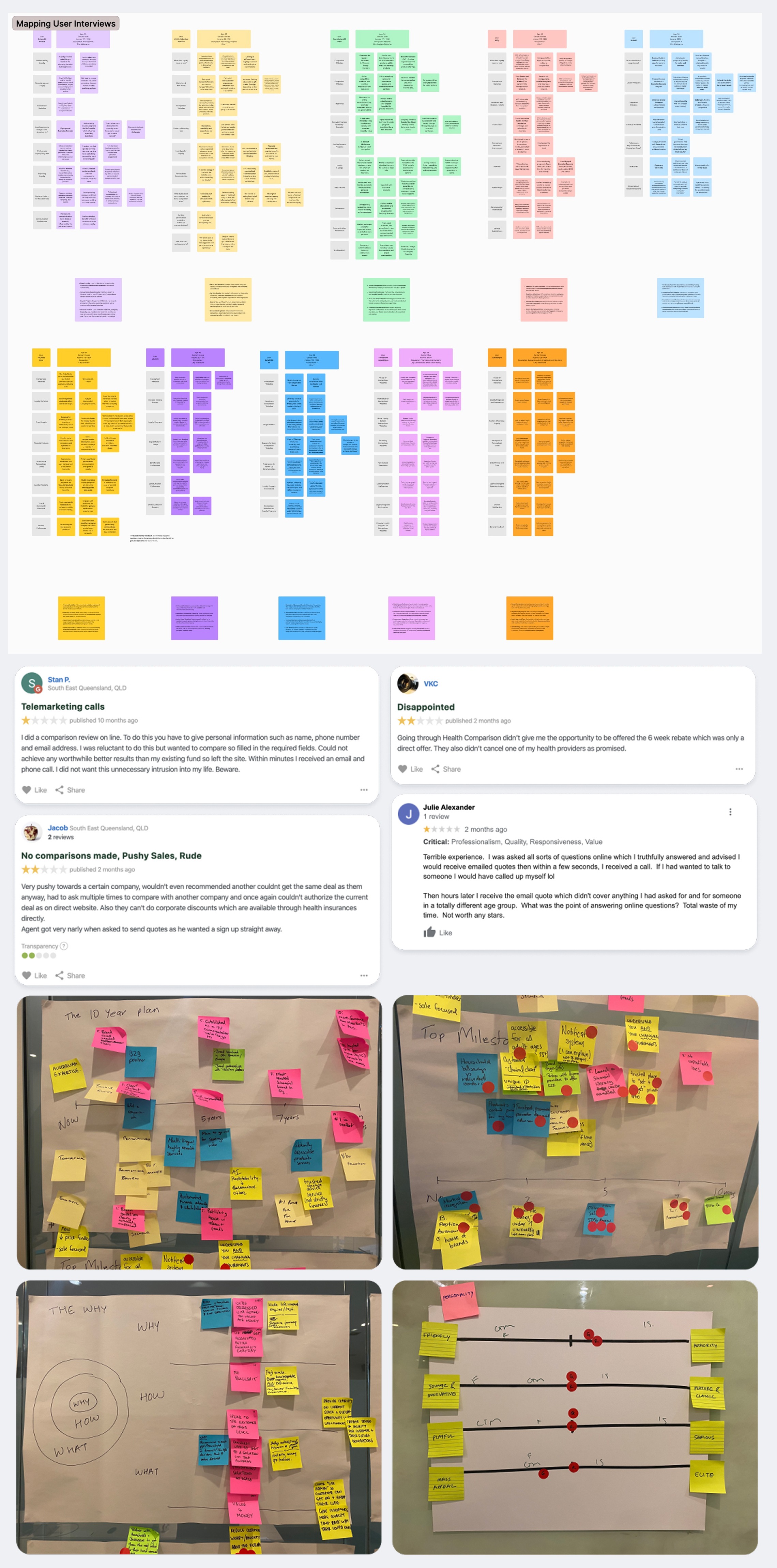
User interviews. Structured sessions with existing customers exploring their environment, device usage, motivations, goals, and frustrations. The questions were designed to surface not just what was broken, but why people came to Compare Club in the first place and what made them stay or leave.
Ethnographic observation. Watching real users interact with the existing platform, unguided. This revealed behaviours that interviews alone wouldn't have caught. People scanning for trust signals that weren't there. People second-guessing whether they'd landed on the right site.
Online review analysis. Broader perspective on common pain points across hundreds of public reviews, complementing the qualitative depth of interviews and observation.
The findings were unanimous. The sites were outdated, violated basic usability principles, and had disjointed information architecture. Almost all participants were frustrated enough to abandon before completing a purchase. The conversion funnel was broken at the trust layer.
Strategy: who are we designing for?
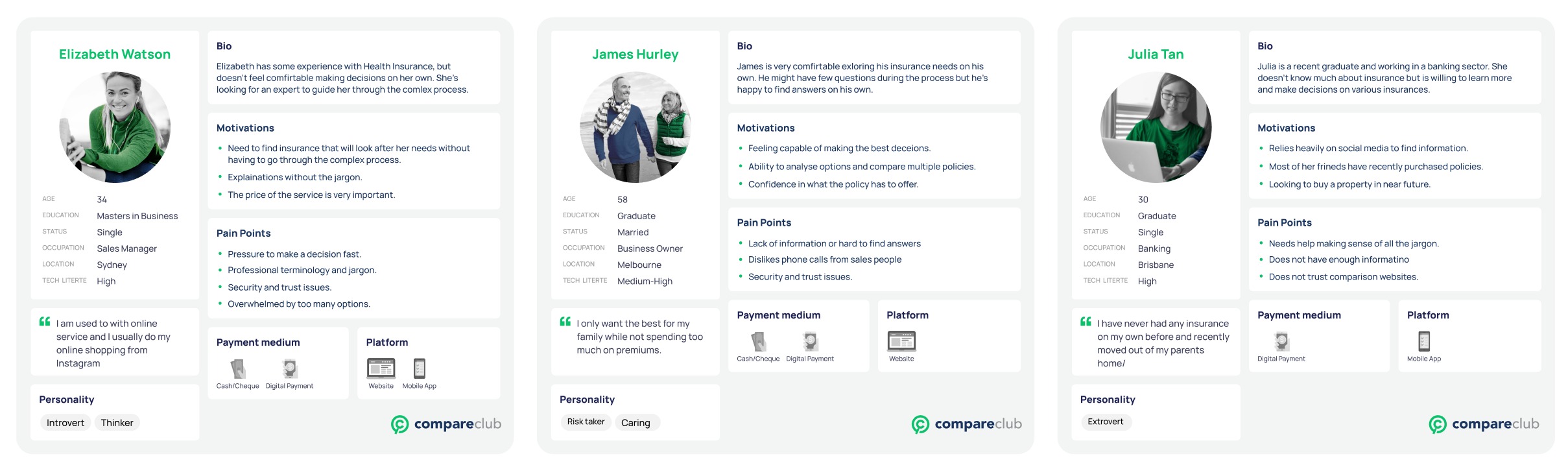
I led a brand and design workshop to align business goals with the research findings. The critical output was three personas that guided every design decision.
The existing customer base skewed 65+. The business wanted to expand into younger, more profitable segments. But you can't design for "younger users" in the abstract. The personas gave us specific people with specific behaviours, preferred channels, and decision-making patterns.
They informed brand positioning, communication strategy, and which interaction channels to prioritise. This wasn't a redesign brief anymore. It was a strategic pivot disguised as a homepage project.
Designing the unified experience
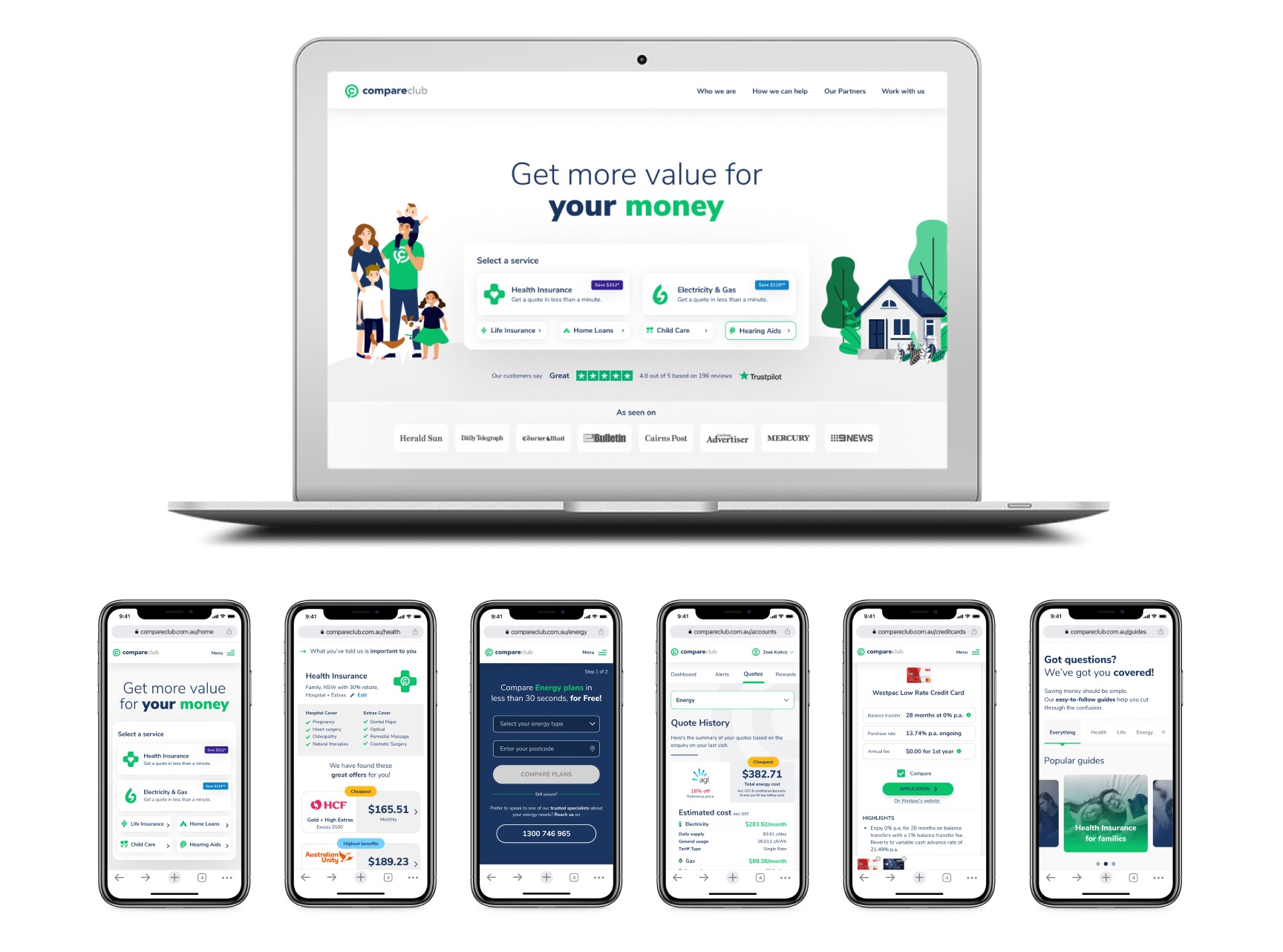
I developed a UX strategy document early: a set of principles that would keep every design decision consistent as the project scaled. Simple, modern, friendly, accessible. These weren't aspirational words on a wall. They were active filters applied to every component, layout, and interaction.
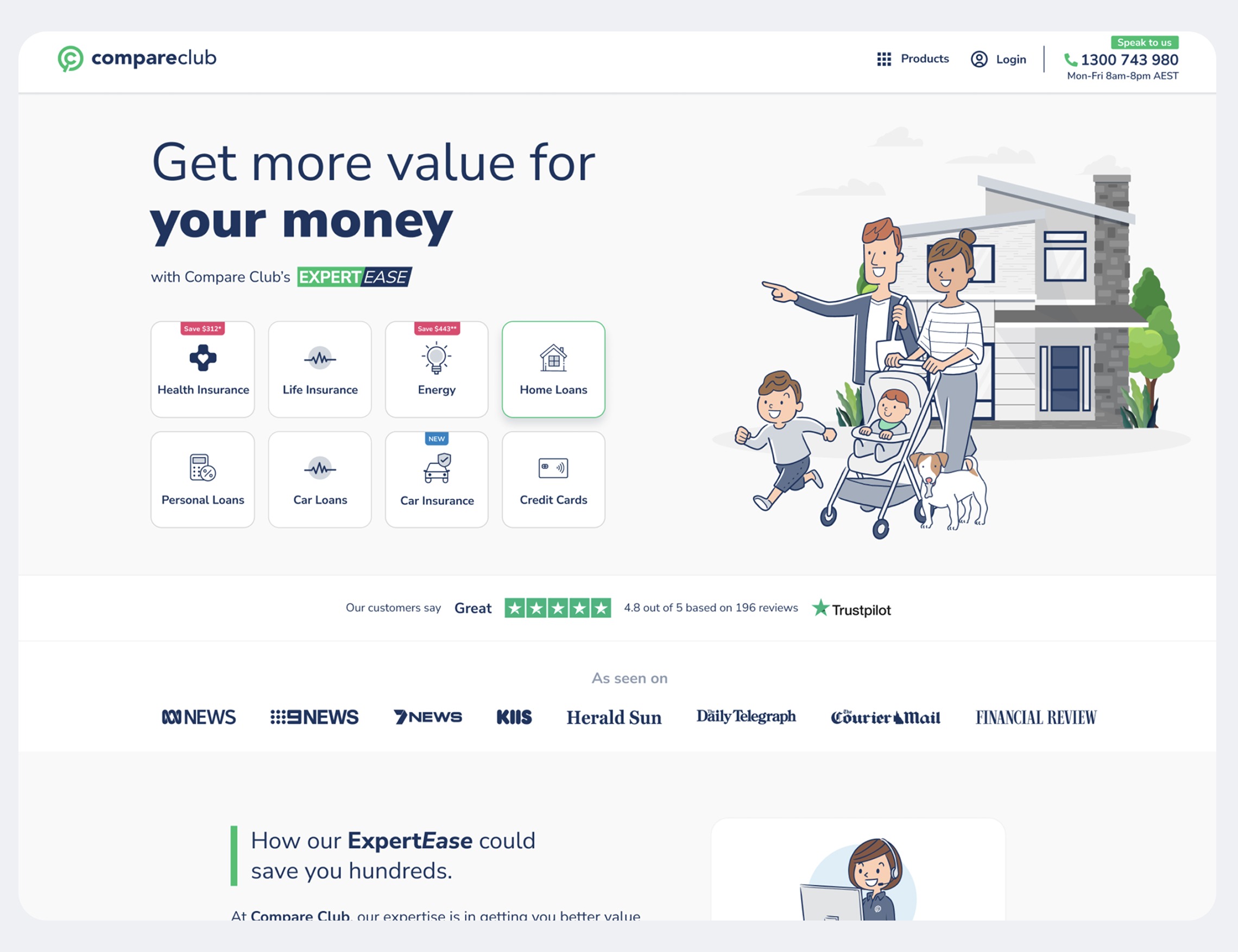
From forms to conversation. The old sites were form-heavy. Fill in your details, submit, wait. The redesign shifted toward a more conversational model. Tile cards on the homepage let users self-select their vertical (Health, Life, Energy) with a single tap instead of hunting through navigation. The experience started with a choice, not a form.
Key components. Hero section with tile cards for vertical selection. Vertical cards with clear CTAs. A trust bar positioned high on the page (moved up after initial testing showed low visibility lower down). Testimonial carousel. Mega-navigation for deeper exploration.
Design system: Club UI. I built a reusable component library alongside the redesign. Tokens, 24 core components, AA accessibility defaults across all products. This wasn't a separate workstream. It was embedded in the redesign so that every new page could be assembled from proven parts.
Testing and iteration
Trust badge repositioning. Initial tests showed users weren't seeing trust signals placed below the fold. I moved them higher, into the hero section. Visibility improved immediately.
Vertical label clarity. Users confused "Health" with "Life" insurance categories. I clarified the labels with supporting descriptions and iconography. First-click accuracy improved.
Scroll fatigue reduction. The initial layout required too much scrolling to reach key content. I reorganised the information hierarchy and introduced the testimonial carousel to deliver social proof without adding vertical length.
Results
The redesign consolidated brand equity, reduced marketing costs through improved SEO (one domain instead of nine), and gave the business a scalable digital foundation for the first time.
What I learned
This project reinforced something I keep coming back to: the biggest UX problems are often trust problems in disguise. Compare Club's fragmented sites weren't just ugly or inconsistent. They were actively eroding the confidence users needed to make a financial decision online. Fix the trust, and the conversion follows.
The other lesson was about the power of a design system built alongside a redesign rather than after it. Club UI didn't slow us down. It made every subsequent page faster to design, faster to build, and more consistent by default. The system paid for itself before the project was finished.