Transforming customer loyalty at Compare Club
The 7% problem
Compare Club was good at acquiring customers. Terrible at keeping them.
Only 7% of customers came back. Acquisition costs were climbing 18% year on year. The entire business model was transactional: help someone compare health insurance once, then spend the same amount (or more) to acquire them again when their policy came up for renewal.
The maths didn't work long-term. And the experience didn't work either. Compare Club helped people during one of the most stressful financial decisions they'd make all year, then disappeared until the next marketing email. No ongoing relationship. No reason to return.
I saw an opportunity to change that.
Understanding what loyalty actually means here
I directed research across two tracks.
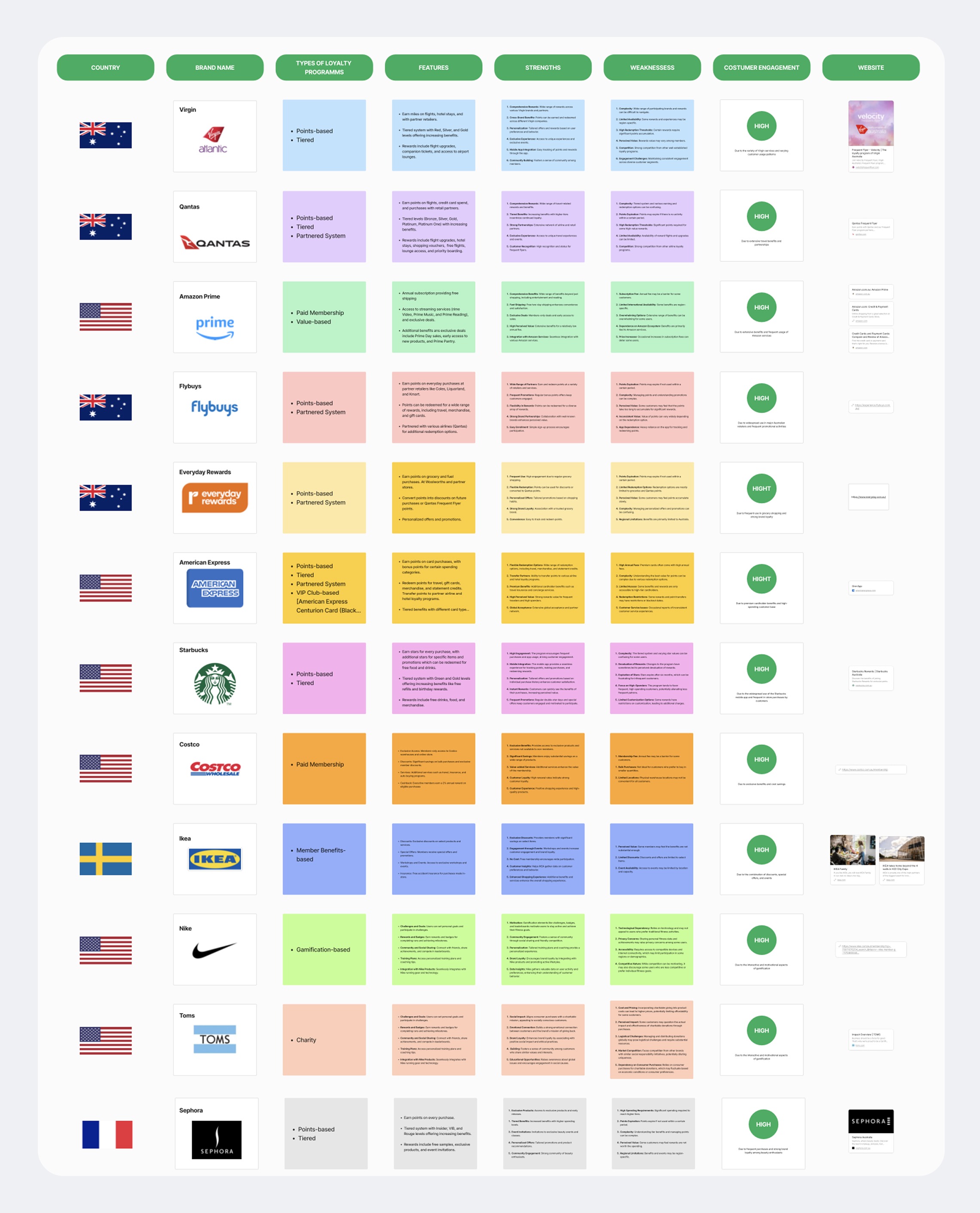
Competitive analysis. I led a review of 20 global and local loyalty platforms. Not just insurance. Retail, banking, airlines, subscriptions. The goal was to understand what made people come back to anything, not just comparison products. The consistent finding: tangible, immediate rewards drive retention. Points systems work when the reward is clear and the path to it is short.
User interviews. Ten 45-minute sessions with a cross-section of active members. New joiners, long-term subscribers, recently reactivated users. I probed their most recent interactions, what rewards made them feel valued, and which moments undermined trust. Each session was recorded, transcribed, and thematically coded.
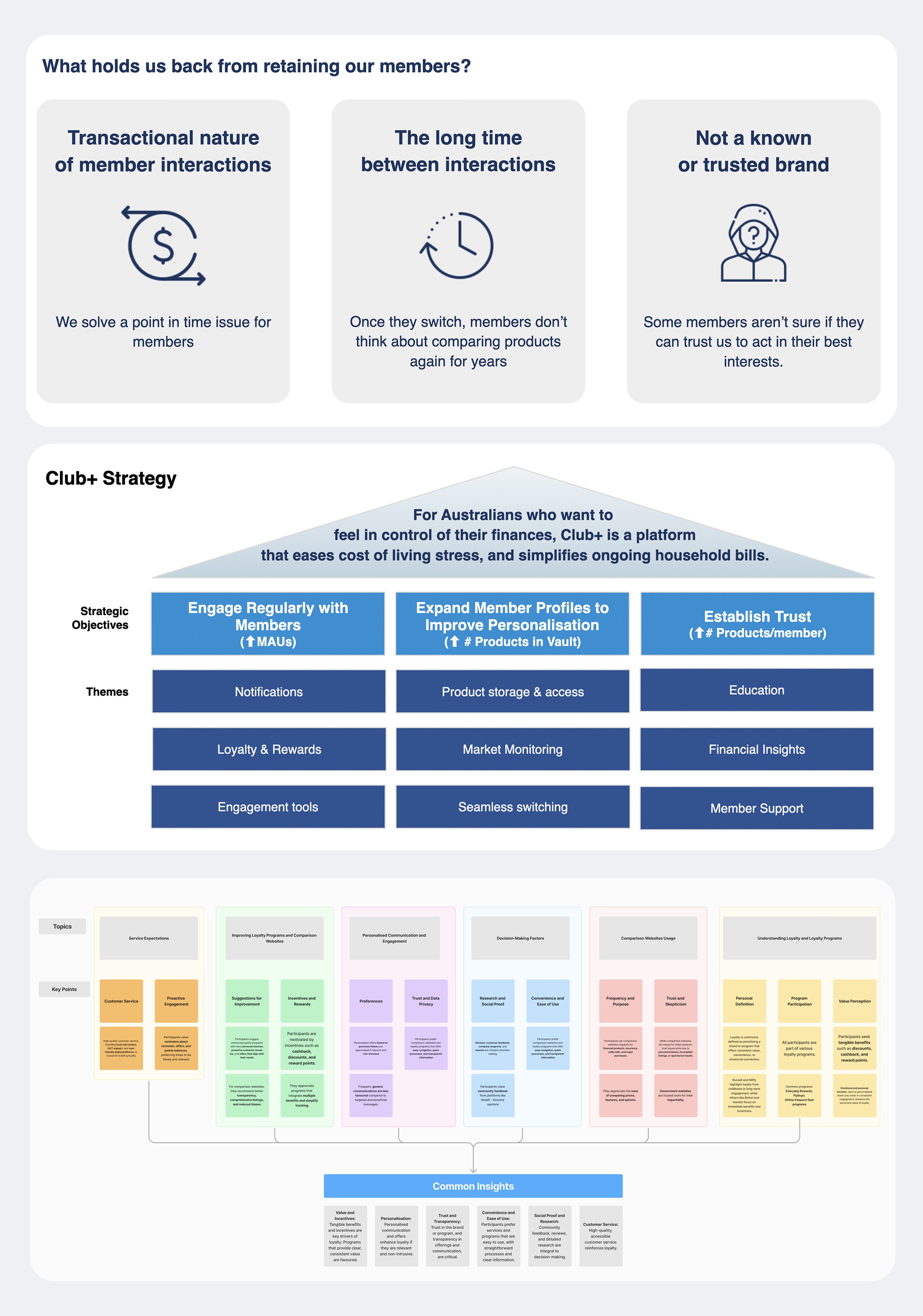
The research mapped three things clearly: what users needed (immediate, tangible value), what they expected (ongoing engagement tied to their real financial life), and what drove churn (feeling forgotten between transactions).
From research to strategy
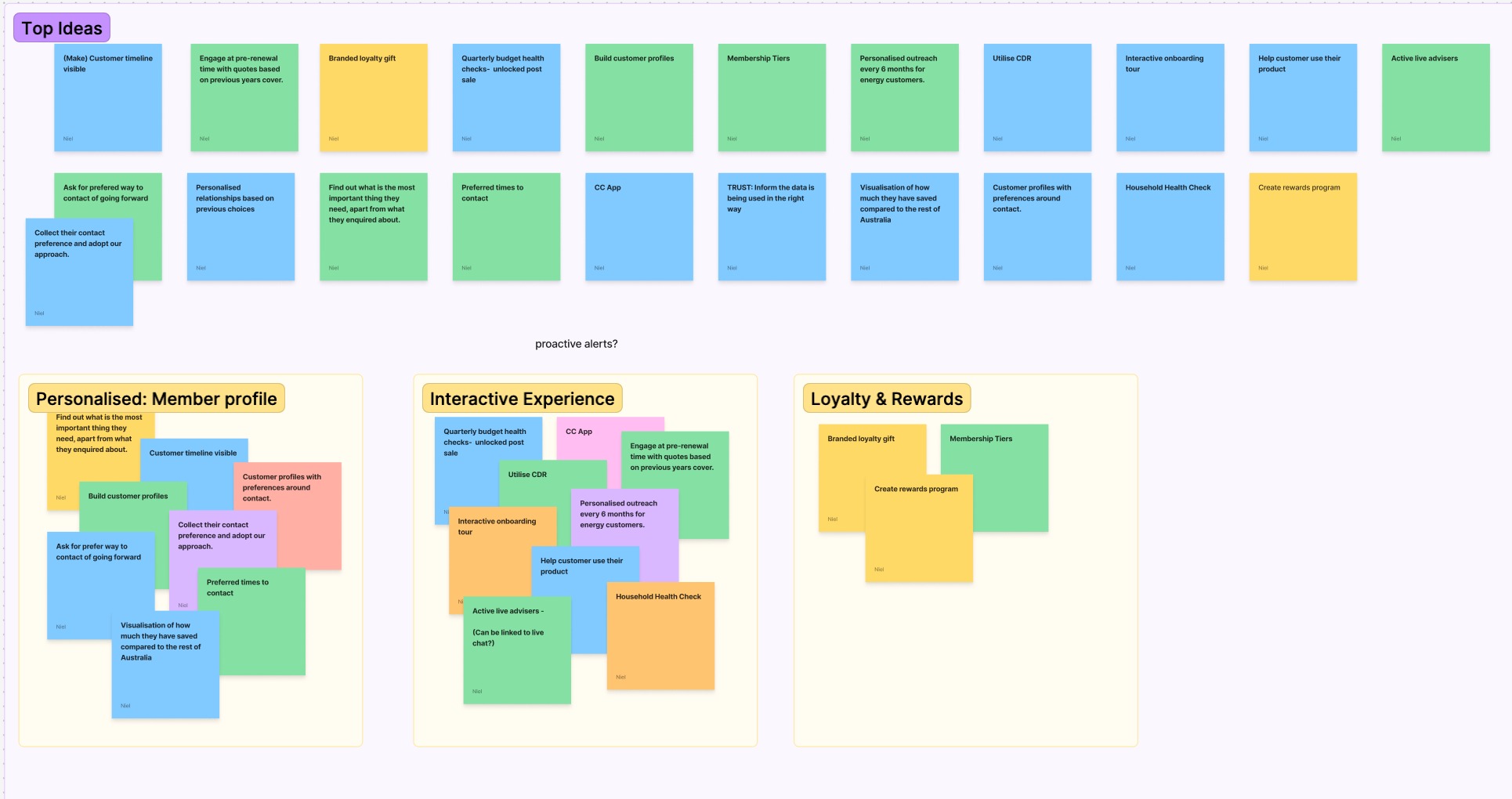
I facilitated cross-functional workshops with Product, Marketing, Engineering, and Data teams. The method was straightforward: "How Might We" statements to frame the problem space, then an impact-vs-effort matrix to prioritise.
The prioritisation surfaced a clear direction. The highest-impact opportunities weren't about building a points system. They were about making Compare Club useful between transactions. Helping people manage their financial life, not just compare one product at a time.
The Club+ vision
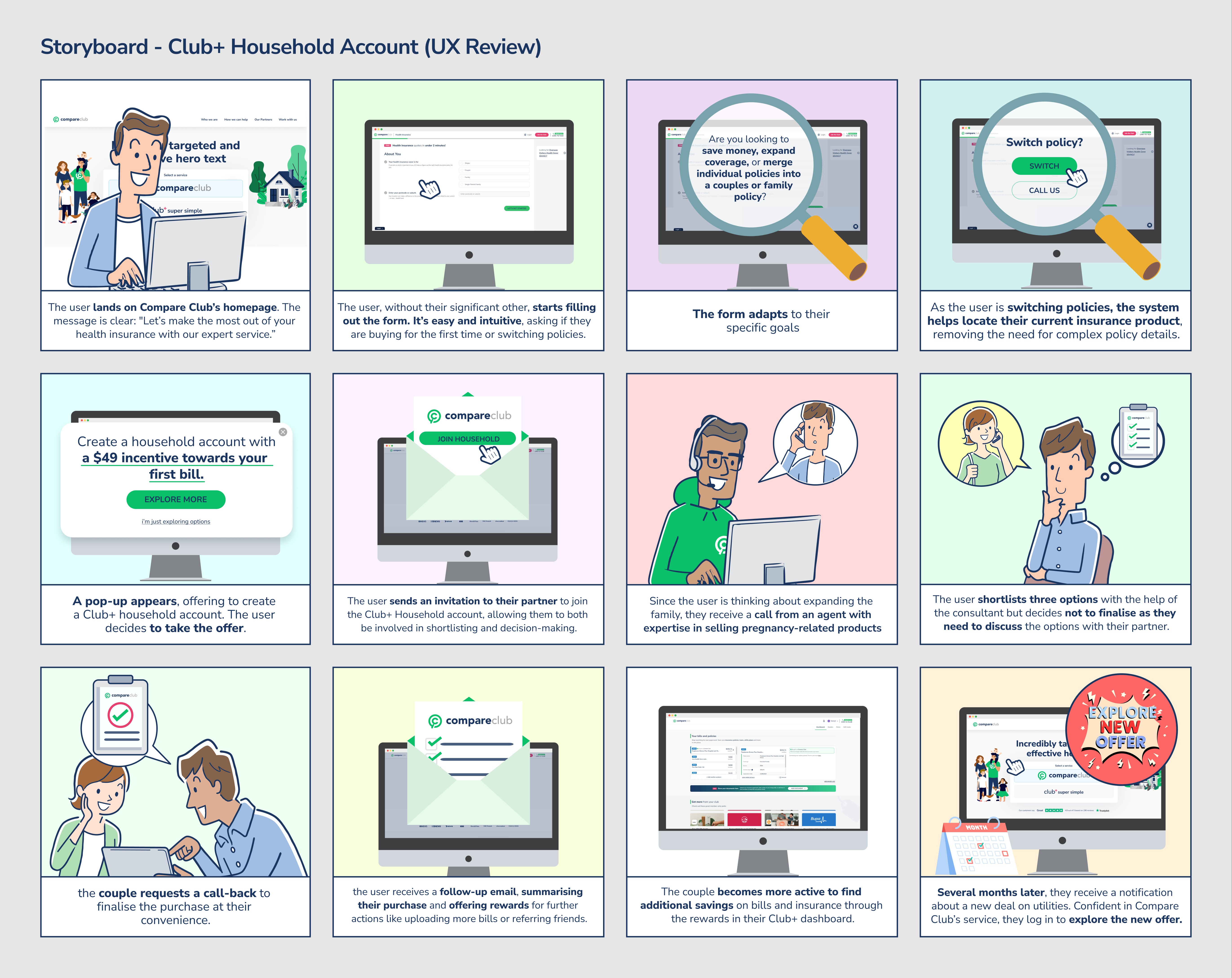
Club+ was the strategic solution. It repositioned Compare Club from a transactional comparison tool to an ongoing financial partner.
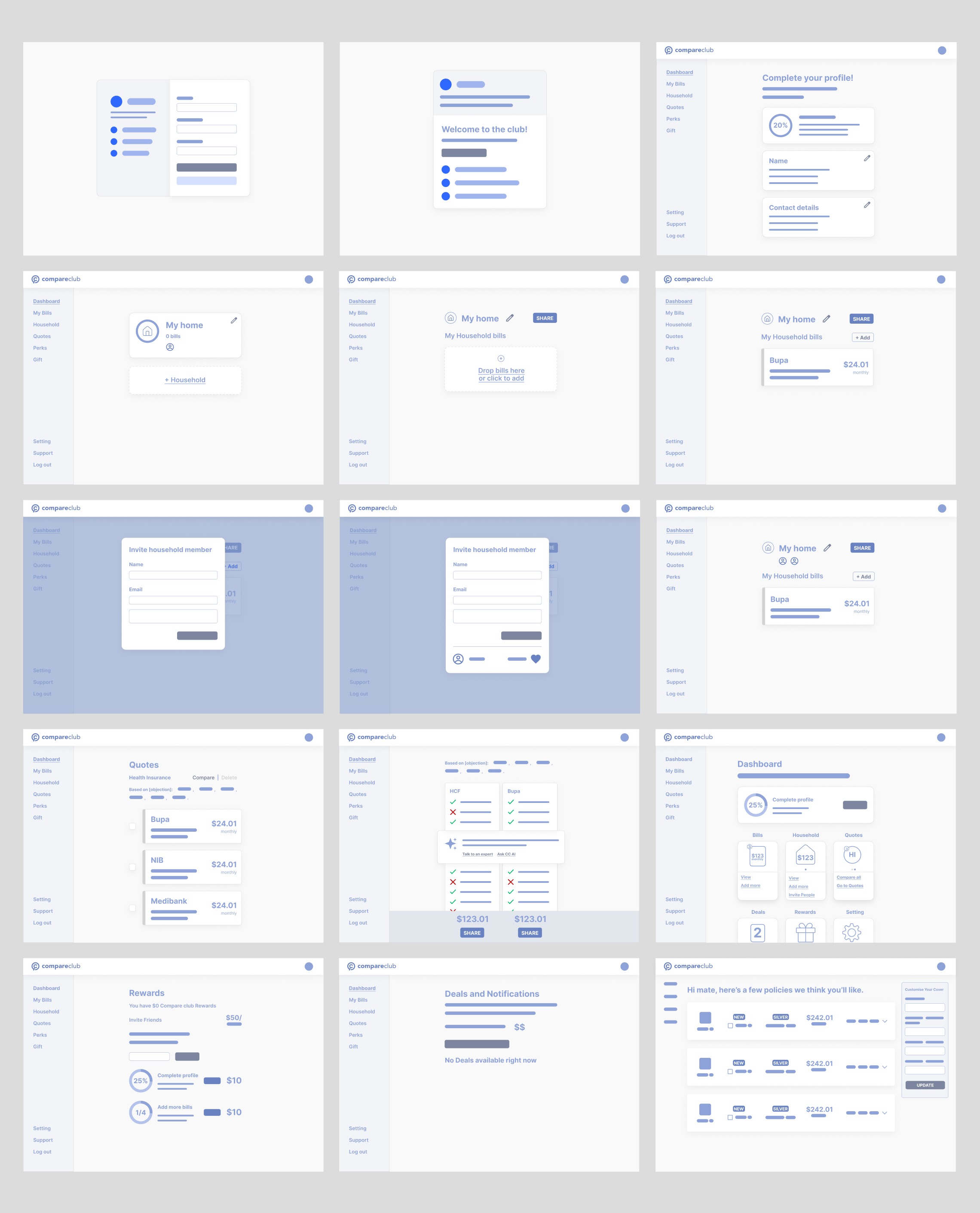
Personalised dashboard. A central hub for managing household bills and policies. Not just Compare Club products. Everything. The design principle: if someone has to leave the platform to check on a policy, we've failed.
Deal alerts. Proactive notifications when a better deal becomes available for products they already hold. The user doesn't have to remember to check. The platform watches for them.
Micro-rewards and perks. Instantly accessible rewards tied to engagement, not just purchases. The research showed that delayed, complicated reward structures kill participation. Small, immediate value keeps people coming back.
Weekly value ledger. A concise summary of savings and personalised recommendations. Transparency as a loyalty mechanism. When people can see the value they're getting, trust compounds.
Future concepts
Beyond the core Club+ launch, I designed three longer-term concepts to extend the vision.
Product Vault. A unified view of all financial products, Compare Club or otherwise. Letting users track, manage, and monitor everything in one place.
Financial education tools. Interactive calculators and educational content to help users understand their finances. Positioning Compare Club as a guide, not just a marketplace.
Rewards and incentives. A comprehensive reward system tied to financial wellness activities. Not gamification for its own sake. Rewards aligned with actions that genuinely benefit the user.
These concepts were designed to extend the product roadmap, not to ship immediately. They gave the executive team a clear picture of where the loyalty strategy could go.
Honest assessment
Club+ was a strategic design initiative. The core features were designed, tested, and validated with users. The vision influenced the product roadmap and secured executive buy-in for long-term investment in retention.
Not all of it shipped in its designed form. Organisational priorities shifted, timelines moved, and some features were descoped or deferred. That's the reality of working on strategic initiatives inside a growing company.
What did land: a fundamental shift in how the business thought about its relationship with customers. Before this project, retention wasn't on the product roadmap. After it, the executive team committed to retention as a strategic priority. That reframing was the most important outcome.
What I learned
The gap between "we want loyalty" and "we're willing to invest in loyalty" is where most retention initiatives die. The research and workshops didn't just produce a design solution. They built the internal case for why retention mattered, using customer data and competitive evidence that made the argument for leadership.
The other lesson: be honest about what "vision" work is. It's not less valuable than shipping. But calling it a shipped product when it's a strategic concept undermines credibility. Design leaders should own the difference.